Reading fluency isn't one skill; it's a sequence, sound recognition, blending, spelling patterns and comprehension, with each stage built on the one before it, so if one stage isn't genuinely solid, everything built on top of it stays shaky no matter what grade a child has already reached at school. In a classroom of 30, a specific gap in that sequence is easy to miss and hard to close once the class has moved on, which is exactly what Reading Circle is built to find and close directly, one-to-one, using Pure Phonics, a method built specifically for children who don't hear English as their only home language, the same approach that has now been used to teach more than 50,000 students.

Phonics-based reading means teaching a child to connect letters to their sounds, then blend those sounds together to read a word, rather than memorizing whole words by sight. For example, once a child knows the sounds for "c," "a" and "t," they can blend them together to read the word "cat," even if they've never seen that exact word written before. This is what lets a child read genuinely new words independently, instead of only recognizing words they've memorized in advance.
Schedule a Free Level Test
| Level | What Your Child Will Learn |
|---|---|
| Foundation | Learning the sound of every letter A to Z, correct letter formation and tracing, and core Dolch sight words, then taking the very first step into blending, connecting two sounds together to start reading simple short-o words. |
| Basic | Full alphabet sound fluency plus systematic blending across short-vowel word families (ap, op, ag, am, et, ug and more), so a child can sound out a wide range of three-letter words on their own. Continued sight-word practice, basic prepositions, and a first introduction to answering simple comprehension questions. |
| Intermediate | More advanced blending patterns: double consonants, consonant digraphs like "sh," r-controlled vowels ("bossy r," as in car and star), diphthongs like "oi," and Magic E (silent e) words such as cake and bike, with comprehension passages and question-answer practice woven in throughout. |
| Advanced | Magic E patterns across every vowel, further diphthongs (ay, oy, uy), complex blends (ble, cle, ple), soft c and soft g sounds, and breaking longer words into syllables, building up to full comprehension passages where the child reads aloud and is checked for understanding, the last stretch before independent, fluent reading. |
A child's level in Reading Circle is set by what they can actually read, not by which grade they're in at school. If the pace is too easy, a child gets bored and disengages. If it's too challenging, they give up before they've really tried. Neither helps them learn, which is why a child in a higher grade at school might start at an earlier Reading Circle level.
That isn't a step backward: it's making sure the foundation underneath is genuinely solid before building further on it. One-to-one teaching is what makes this possible, since a tutor can adjust the pace for one child in a way a classroom of 30 simply can't.
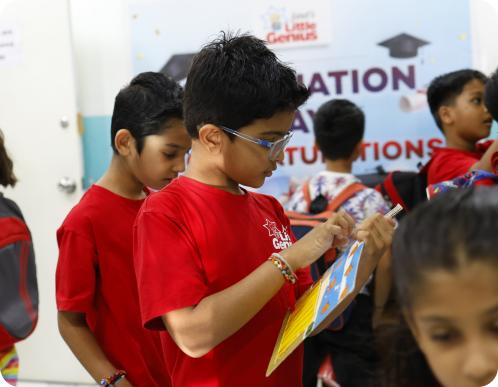
Reading fluency is a foundational skill every school system assumes a child has, whether they're enrolled under CBSE, ICSE, IGCSE, the IB, a state board, or a curriculum abroad such as the UK National Curriculum, the US Common Core, the Australian Curriculum, or a Gulf or Singapore school system. Reading Circle isn't tied to any one syllabus. It builds the underlying decoding and comprehension skill that every one of these systems assumes is already in place by the time a child reaches Grade 1 or 2, which is exactly the assumption that doesn't hold for every child. Sessions are scheduled around your family's time zone, wherever in the world you're based.




A child can usually recite the alphabet long before they can actually decode a word. That gap is exactly where many children get stuck, and it's often mistaken by parents for a reading problem rather than what it actually is: a missing link between letter names and letter sounds. Reading requires phonemic awareness, the ability to hear and manipulate individual sounds in a word, not just letter recognition. Pure Phonics builds this specific skill deliberately and in sequence, rather than assuming it develops on its own.

It's common, and it isn't laziness. Guessing from pictures or context feels faster and less frustrating than sounding out an unfamiliar word, but it stalls real reading progress because it doesn't scale past simple picture books. Pure Phonics addresses this directly by building genuine decoding skill, blending sounds into words, as the primary method, so a child can work out an unfamiliar word instead of needing to recognize it by sight or guess from a picture.
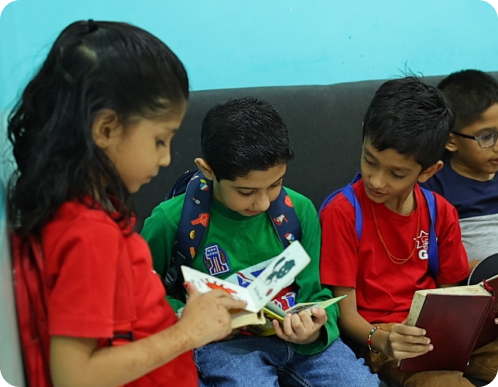


With a dedicated online phonics tutor, your child gets a personalized lesson plan, step-by-step reading guidance, instant doubt-solving the moment a mistake happens rather than days later, and regular progress tracking against real milestones instead of a fixed pace set for a whole classroom.
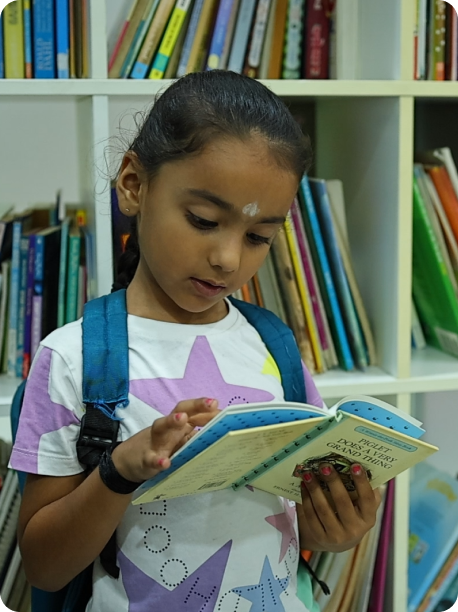


A child who isn't reading fluently by Grade 2 or 3 usually already gets extra reading practice at home and still doesn't see it click, because practice alone doesn't fix a specific missing skill. It just repeats the same gap. Reading Circle starts with a diagnostic level test to find exactly where the breakdown is, whether that's letter-sound recognition, blending, tricky spellings, or comprehension, and builds a plan around that specific gap, one-to-one, rather than more general reading practice at the wrong level.
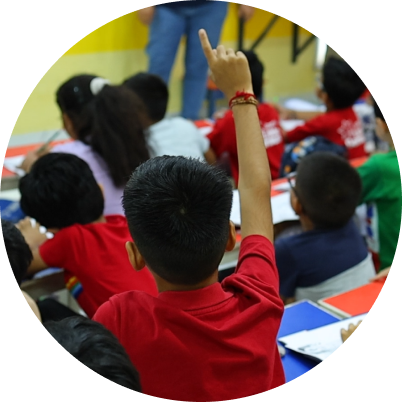
It's built for children up to about Grade 3 who need their reading foundation strengthened. The program is designed around each child's own pace, not a fixed age or grade cutoff. Placement is based on a free diagnostic level test that finds exactly where a child's reading sequence needs work.
The program is purpose-built for a child already at school whose reading foundation needs to be made genuinely solid, which is where Pure Phonics' step-by-step, gap-finding approach adds the most value. A true first-time beginner can still benefit from the same method, but if your child hasn't started school yet, ask about the English Enrichment Program's own Foundation levels, which build Pure Phonics from the very start as part of a broader curriculum.
This is one of the most common things parents ask, and it isn't unusual. Knowing letter names is a different skill from phonemic awareness, hearing and working with the individual sounds inside a word. Pure Phonics builds this specific missing link directly and in sequence, rather than assuming it develops on its own from letter recognition alone.
Guessing from a picture or the first letter is often a shortcut a child develops because it's faster than decoding, but it stops working once books rely less on pictures. Pure Phonics is built to make genuine decoding, blending sounds into words, the more natural, faster path, so guessing becomes unnecessary rather than something to break as a habit.
Many phonics programs used in India were adapted from methods built for children who already hear English as their main home language. Pure Phonics was designed specifically for children who don't, connecting sounds and letters in a simpler, more direct sequence so reading, spelling and eventually grammar build on a foundation suited to how these children actually acquire English.
Reading (decoding) and spelling (encoding) use the same phonics knowledge, but in opposite directions: sounding out a written word versus building a word from sounds you hear in your head. It's common for one to lag the other, and Pure Phonics deliberately practices both directions rather than assuming one automatically produces the other.
Yes, phonics classes are scheduled around your family's time zone, wherever in the world you're based, with the same Pure Phonics curriculum used for families in India.
Reading Circle is taught fully one-to-one. Your child has the tutor's complete attention for every session, which is what allows instant, in-the-moment correction rather than a fixed pace set for a group.
Most parents notice a shift in reading confidence, attempting unfamiliar words instead of avoiding them, within the first few weeks. Full progress through a level is tracked over the 36-session structured program, with 4 parent-teacher conferences along the way so progress is visible, not just assumed.
This is extremely common in early readers and usually resolves with continued phonics practice rather than being a sign of a deeper issue. It reflects the fine visual-sound discrimination skill young children are still building, which is exactly what structured phonics instruction directly targets.
Schools often don't flag a reading gap explicitly, especially if a child has learned to guess convincingly from pictures or context, so the gap only becomes obvious later, when books stop relying on pictures. If your child avoids reading aloud, reads far below the books their classmates are reading, or seems to have memorized rather than actually decoded certain words, it's worth a free diagnostic level test to see exactly where they stand.
Phonics builds the same structured, systematic sound-to-letter foundation that's widely used to support children with dyslexia and other reading differences, so many families see real benefit from it. That said, Reading Circle is an educational reading program, not a clinical or diagnostic service, so it isn't a substitute for a formal assessment or speech and language therapy where that's needed. If your child has a diagnosis, it's worth mentioning it at the free diagnostic level test so the tutor can factor it into how the sessions are paced.
Every Reading Circle level, Foundation, Basic, Intermediate and Advanced, runs 36 sessions of 45 minutes each.