




One-on-One English Grammar Classes for Kids in Melbourne
If you're searching for the best online English grammar classes for NRI kids in Melbourne, you've probably noticed the same pattern a lot of Indian-heritage parents here do: your child speaks English fluently at home and at school, but the same sentence on paper comes out with the wrong tense, a subject and verb that don't match, or punctuation nowhere near where it belongs. That gap between speaking well and writing correctly isn't a discipline problem. It's exactly the gap a dedicated one-on-one grammar tutor is built to close, and it's why the English Enrichment Program at Little Genius Academy treats grammar as something taught through real sentences a child actually writes, not through worksheets memorised the night before a test.
Why Melbourne Families Are Asking About Grammar Specifically
Melbourne is home to one of the largest Indian-origin communities in Australia. According to the 2021 Australian Census, India was the leading overseas birthplace among Melbourne residents, and 320,013 people in Melbourne (7.0% of the population) had a father born in India, with the community concentrated heavily in the City of Wyndham (65,433 people) and the City of Casey (44,967 people). That's a large, young, education-focused population, and a specific pattern shows up again and again in this group: children who are completely fluent conversationally, because English is spoken at home and at school every day, but whose written grammar lags behind their spoken fluency.
Part of the reason is structural. The Victorian Curriculum teaches English through three interrelated strands, Language, Literature and Literacy, with grammar folded into all three rather than taught as its own explicit subject the way many Indian-heritage parents remember from their own schooling. That's a genuinely different design choice, not a worse one, but it means a child can move through several school years without ever getting the kind of direct, rule-by-rule grammar instruction many parents are specifically looking to add at home.
For these families, the realistic options are limited: a generic Melbourne tutor with no specific grounding in explicit grammar instruction, a worksheet-based app with no live correction, or a live tutor based in India whose class times don't reliably line up with a Melbourne afternoon. One-on-one grammar tutoring for Indian kids in Melbourne through Little Genius is built for exactly this gap: a live, one-to-one tutor watching your child's actual sentences and correcting them in the moment, not a batch of exercises marked after the fact.
What a Grammar Session With Little Genius Actually Looks Like
This is exactly why grammar classes for Indian kids online Melbourne need to start from a live tutor watching a child's actual sentences, not a generic worksheet. Every session is one-to-one: a single child working with a dedicated tutor for the full session, not a shared slot in a larger batch. Sessions lean on a technique researchers call recasting, where a tutor repeats a child's sentence back correctly in context the moment a mistake happens, rather than stopping to explain a rule in the abstract. A child who says "she go to school every day" hears it come back as "oh, she goes to school every day" inside the same conversation, which is how grammar rules get absorbed the same way vocabulary does: through repeated, meaningful use, not memorised in isolation.
The English Enrichment Program builds grammar alongside Phonics, Creative Writing, Public Speaking and Vocabulary, because these skills reinforce each other. A child who understands why a sentence needs a matching subject and verb writes more confidently, and a child who writes more confidently speaks up more readily in class. Concept-based grammar classes for kids online at Little Genius mean a child learns why a rule works, not just the rule itself, which is what makes it hold up in a new sentence the child has never seen before, not just the one on a worksheet.
A second pattern shows up almost as often: articles. "A," "an" and "the" don't exist in the same form in several Indian languages, so a child who is completely fluent otherwise will sometimes drop them entirely ("I saw dog in park") or place them inconsistently, a pattern that tends to persist in writing even after it disappears from casual speech, because writing gives a child time to think about word choice but not necessarily about function words that don't carry obvious meaning. Explicit grammar instruction for kids online addresses this directly, rather than assuming it will resolve on its own with more reading, by naming the pattern for what it is and practising it in the child's own sentences until it becomes automatic.
Built Alongside the Victorian Curriculum, Not Against It
English in Victorian government and independent schools follows the Victorian Curriculum F-10, set by the Victorian Curriculum and Assessment Authority (VCAA), which builds grammar understanding gradually across the Language, Literature and Literacy strands rather than as an isolated unit. The English Enrichment Program isn't a replacement for what your child covers at school in Melbourne. It's built to reinforce that same foundation with more explicit grammar depth and a faster, more individually paced starting point than a classroom of 20-plus students can offer any one child, while also keeping the door open for families who may return to India or move elsewhere, since the program is equally built around CBSE, ICSE, IGCSE, IB and other state and international curricula.
What a Free Diagnostic Level Test Actually Tells You
Every child starts with a free diagnostic level test, not an assumption based on their Year level. This matters especially for children who sound fluent but have never had their written grammar assessed directly: it places your child at their real grammar starting point, whether that's well ahead of their Year group or in need of foundational work on a specific rule, like subject-verb agreement or tense consistency, before more advanced writing makes sense. The English Enrichment Program is trusted by families across 50,000+ students taught so far, in India and among NRI families abroad, including a growing number in Melbourne, Sydney and Auckland.

Frequently Asked Questions
Is this the best option for a Melbourne family with an Indian curriculum background?
It"s built
specifically for that gap. The English Enrichment Program teaches explicit, concept-based grammar that reinforces
what's taught under the Victorian Curriculum at school, while also drawing on the kind of direct grammar instruction
many Indian-heritage parents want reinforced at home, without running a competing syllabus.
What times are classes available for a family in Melbourne?
Sessions are scheduled around your family"s
actual afternoon or evening in Melbourne, generally from around 3:30 pm onward local time. Australian Eastern
Standard Time (AEST) is about 4 hours 30 minutes ahead of India Standard Time, or 5 hours 30 minutes ahead during
Australian daylight saving (AEDT), which puts a Melbourne after-school slot squarely in an Indian teacher's normal
working morning or midday, not a compromise on either side.
Is it one-to-one, or does my child share the session?
Every session is one-to-one. Your child works with a
dedicated tutor for the full session, which matters most for grammar specifically, since a child needs their own
actual sentences corrected in real time, not a set of generic examples shared across a group.
My child speaks perfect English but writes with grammar mistakes. Will this help?
Yes, this is one of the
most common patterns the program is built to address. Spoken English allows real-time self-correction, a child can
restart a sentence mid-way if it sounds wrong, while writing requires holding the full grammatical structure in mind
before committing it to the page, without that live feedback. Sessions pair spoken and written practice together so
that gap closes over time.
How soon do parents in Melbourne typically see a difference?
Most parents notice fewer repeated mistakes
in everyday writing, homework, messages, simple stories, within the first 8 to 10 sessions. Deeper gains, like a
child self-correcting grammar without prompting, tend to build over 2 to 3 months of consistent sessions.
My child drops small words like "a" and "the" in writing but not always in speech. Is that a grammar problem?
It's a genuine and very common pattern, not carelessness, and it's specifically common among children whose home
language doesn't use articles the same way English does. It shows up more in writing than speech because writing
gives a child time to focus on word choice and meaning, which can crowd out attention to smaller function words that
don't carry obvious meaning on their own. Sessions target this directly with the child's own sentences, not generic
fill-in-the-blank exercises.
If you're in Melbourne and want to see exactly where your child's grammar actually stands, not just where their Year level says it should be, book a free diagnostic level test with Little Genius Academy. It takes one session to see the specific gap, and one term to start closing it.
Related Posts


The Roadmap to Reading
Read More

Importance of Communication
Read More
Teamwork for The Win?
Read More
Time Management
Read More
English At Home
Read More
Importance of Developing Soft Skills
Read More
How to Make a Bumpy Transition Seamless
Read More
How to prepare for your child?s career
Read More
Benefits of Volunteering from An Early Age
Read More
Dynamic of a teacher and students in a modern-day classroom setting
Read More
Online safety for kids
Read More
Tips to make a child a better speaker/reader
Read More
How to Be a Working Parent
Read More
Raising Easily Distracted Children
Read More
Talking about puberty with children
Read More
Olympiads 2022 - 23
Read More
Tips for Raising Kids in Multigenerational Households
Read More
Letter Recognition and Knowledge - The Childhood Edition
Read More
Reading with digraphs and diphthongs
Read More
Importance Of Logical Reasoning In The 21st Century
Read More

A Complete Guide To Developing Soft Skills
Read More
How to teach public speaking to your children
Read More
How do I make my child a better speaker
Read More
Strategies for tackling homework with kids
Read More
Engaging Creative Writing Exercises for Young Minds
Read More
Top 10 Ways to Solve Comprehension Questions
Read More
How to Prepare for Spelling Bees
Read More
How to Develop Strong Comprehension Skills in Kids
Read More
The Future of Learning: How AI is Transforming Education for Kids
Read More
Why Spelling Bees are Important for Your Child's Future
Read More
Phonics That Work: Helping Your Child Read Confidently in 90 Days
Read More
Grammar Without Tears: How to Build English Fluency in Young Children
Read More
Creative Writing for Kids: Igniting the Spark of Imagination
Read More
From Struggling to Fluent: How One-on-One Phonics Helps Children Read
Read More
Cracking the Code: How Strong Numeracy Skills Shape Future Success in Math and Beyond
Read More
Why Grammar Still Matters in the Age of Texts and Emojis
Read More
Why One-on-One English Classes are the Future of Language Learning for Kids
Read More
Unlocking Confidence Through Communication: Why Public Speaking Should Start Young
Read More
5 Ways to Integrate Geography in Children's Learning Journey
Read More
Why Your Child Needs One-on-One Grammar Classes in Bangalore
Read More
Why Vocabulary Building Is the Backbone of Language Learning for Kids
Read More
Why Grammar Matters: Building Strong Communicators from a Young Age
Read More
Mastering Grammar: The Key to Confident Communication for Young Learners
Read More
Why Public Speaking Classes Are a Must for Kids Today
Read More
Early Math Learning in Udaipur: Helping 3-Year-Olds Build Confidence with Numbers
Read More
Building Early Reading Skills in Indore: Why Phonics Is the Key for 3-Year-Olds
Read More
Teaching Your Child to Work as a Team
Read More
Building Early Math Skills in Nagpur: A Guide for Parents of 3-Year-Olds
Read More
Best Phonics Class in Kolhapur: Helping Kids Read with Confidence
Read More
Why Pure Phonics Works Better Than Synthetic Phonics for Indian Learners ? A Parent?s Guide from Jaipur
Read More
Best Phonics Class in Jodhpur: How Pure Phonics Builds Confident Readers
Read More
Best Phonics Class in Udaipur: Helping Children Read with Clarity and Confidence
Read More
Best Phonics Class in Anand: How Pure Phonics Helps Children Read with Ease and Confidence
Read More
Best Phonics Class in Nadiad: How Pure Phonics Builds Strong Readers and Thinkers
Read More
Best Phonics Class in Kanpur: Helping Children Read with Confidence Through Pure Phonics Learning
Read More
Best Phonics Class in Patna: Helping Children Read with Clarity and Confidence Through Pure Phonics
Read More
Best Phonics Class in Jamnagar: Building Confident Readers Through Pure Phonics
Read More
Best Phonics Class in Indiranagar: Helping Children Read Confidently Through Pure Phonics Learning
Read More
Best Phonics Class in Bokaro: Helping Young Learners Read Fluently Through Pure Phonics
Read More
Best Phonics Class in Whitefield: Helping Children Become Fluent Readers Through Pure Phonics
Read More
Best Phonics Class in Koramangala: Helping Children Build Strong Reading Foundations Through Pure Phonics
Read More
Best Phonics Class in HSR Layout: Helping Children Build Reading Fluency Through Pure Phonics
Read More
Best Phonics Class in Sarjapur Road: Helping Children Read Fluently and Confidently Through Pure Phonics
Read More
Best Phonics Class in Jayanagar: Helping Children Build Clear Reading and Speaking Skills Through Pure Phonics
Read More
Best Phonics Class in Hebbal: Building Strong Reading and Speaking Skills Through Pure Phonics
Read More
Best Phonics Class in Yelahanka: Helping Children Become Fluent Readers Through Pure Phonics
Read More
Best Phonics Class in Malleshwaram: Helping Children Build Strong Reading Skills Through Pure Phonics
Read More
Best Phonics Class in Electronic City: Helping Children Become Clear, Confident Readers Through Pure Phonics
Read More
Why Online Phonics Classes Are the Best Start for Early Readers (Ages 4–6)
Read More
How Online Phonics Classes Build Strong Reading and Speaking Skills in Children
Read More
Why Online Phonics Classes Are the Best Start for Early Readers (Ages 4–6)
Read More
Pure Phonics vs Memorisation: How Children Learn to Read Independently
Read More
Blending and Segmenting: The Skills That Turn Sounds Into Reading
Read More
Blending and Segmenting: The Skills That Turn Sounds Into Reading
Read More
Blending and Segmenting: The Skills That Turn Sounds Into Reading
Read More
Best Phonics Class in Nagpur: Helping Children Read with Confidence Through Pure Phonics
Read More
Pure Phonics vs Memorisation: How Children in Dubai Learn to Read Independently
Read More
Pure Phonics vs Memorisation: How Children Learn to Read Independently
Read More
What Is Phonics and Why It Is the Foundation of Reading for Young Children
Read More
What Is Phonics and Why It Is the Foundation of Reading for Young Children
Read More
Why Knowing the Alphabet Is Not Enough to Learn Reading
Read More
Why Knowing the Alphabet Is Not Enough to Learn Reading
Read More
Why Knowing the Alphabet Is Not Enough to Learn Reading
Read More
What Is Phonics and Why It Is the Foundation of Reading for Young Children
Read More
Blending and Segmenting: The Skills That Turn Sounds Into Reading
Read More
Why Knowing the Alphabet Is Not Enough to Learn Reading
Read More
Pure Phonics vs Memorisation: How Children in Abu Dhabi Learn to Read Independently
Read More
What Is Phonics and Why It Is the Foundation of Reading for Young Children
Read More
Blending and Segmenting: The Skills That Turn Sounds Into Reading
Read More
Why Knowing the Alphabet Is Not Enough to Learn Reading
Read More
Pure Phonics vs Memorisation: How Children in Sharjah Learn to Read Independently
Read More
What Is Phonics and Why It Is the Foundation of Reading for Young Children
Read More
Blending and Segmenting: The Skills That Turn Sounds Into Reading
Read More
Why Knowing the Alphabet Is Not Enough to Learn Reading
Read More
Pure Phonics vs Memorisation: How Children in Ajman Learn to Read Independently
Read More
What Is Phonics and Why It Is the Foundation of Reading for Young Children
Read More
Blending and Segmenting: The Skills That Turn Sounds Into Reading
Read More
Why Knowing the Alphabet Is Not Enough to Learn Reading
Read More
Pure Phonics vs Memorisation: How Children in Kuwait Learn to Read Independently
Read More
What Is Phonics and Why It Is the Foundation of Reading for Young Children
Read More
Blending and Segmenting: The Skills That Turn Sounds Into Reading
Read More
Why Knowing the Alphabet Is Not Enough to Learn Reading
Read More
Pure Phonics vs Memorisation: How Children in Bahrain Become Confident Readers (and When 1:1 Phonics Helps Most)
Read More
What Is Phonics and Why It Is the Foundation of Reading for Young Children
Read More
Blending and Segmenting: The Skills That Turn Sounds Into Reading
Read More
Why Knowing the Alphabet Is Not Enough for Reading
Read More
Pure Phonics vs Memorisation: How Children in Qatar Become Confident Readers (And When 1:1 Phonics Makes the Difference)
Read More
Blending and Segmenting: The Skills That Turn Sounds Into Reading
Read More
Why Knowing the Alphabet Is Not Enough to Learn Reading
Read More
Pure Phonics vs Memorisation: How Children in Bahrain Become Confident Readers (and When 1:1 Phonics Helps Most)
Read More
What Is Phonics and Why It Is the Foundation of Reading for Young Children
Read More
Blending and Segmenting: The Skills That Turn Sounds Into Reading
Read More
Why Knowing the Alphabet Is Not Enough for Reading
Read More
Pure Phonics vs Memorisation: How Children in Qatar Become Confident Readers (And When 1:1 Phonics Makes the Difference)
Read More
“My Child Knows ABC but Cannot Read” — A Guide for Al Khobar Parents
Read More
“My Child Knows ABC but Cannot Read” — A Guide for Dammam Parents
Read More
“My Child Knows ABC but Cannot Read” — A Guide for Riyadh Parents
Read More
Best Online Phonics Classes in Al Khobar: A Complete Guide for Parents
Read More
Best Online Phonics Classes in Dammam: A Complete Guide for Parents
Read More
Best Online Phonics Classes in Jeddah: A Complete Guide for Parents
Read More
Best Online Phonics Classes in Riyadh: A Complete Guide for Parents
Read More
Blending and Segmenting: The Skills That Turn Sounds Into Reading
Read More
One-on-One Phonics Classes for Kids in Al Khobar: When Personal Attention Makes the Difference
Read More
One-on-One Phonics Classes for Kids in Dammam: When Personal Attention Makes the Difference
Read More
One-on-One Phonics Classes for Kids in Jeddah: When Personal Attention Makes the Difference
Read More
One-on-One Phonics Classes for Kids in Jeddah: When Personal Attention Makes the Difference
Read More
“My Child Knows ABC but Cannot Read” — A Guide for Jeddah Parents
Read More
One-on-One Phonics Classes for Kids in Riyadh: When Personal Attention Makes the Difference
Read More
Online Phonics Classes vs Private Tutor in Al Khobar: What Should Parents Choose?
Read More
Online Phonics Classes vs Private Tutor in Dammam: What Should Parents Choose?
Read More
Online Phonics Classes vs Private Tutor in Jeddah: What Works Better for Your Child?
Read More
Online Phonics Classes vs Private Tutor in Riyadh: What Works Better for Your Child?
Read More
Pure Phonics vs Memorisation: How Children in Saudi Arabia Become Confident Readers (And When 1:1 Phonics Helps Most)
Read More
What Is Phonics and Why It Is the Foundation of Reading for Young Children
Read More
Why Knowing the Alphabet Is Not Enough for Reading
Read More
“My Child Knows ABC but Cannot Read” — Understanding the Real Problem
Read More
Best Online Phonics Classes in New Zealand: A Complete Guide for Parents
Read More
One-on-One Phonics Classes for Kids in New Zealand: When Individual Support Makes a Difference
Read More
Online Phonics Classes vs Private Tutor in New Zealand: What Should You Choose?
Read More
One-on-One Spoken English Classes for Kids Online: Why Personalized Attention Works Best
Read More
Concept-Based Math Classes for Kids Online: Why Understanding Beats Memorizing
Read More
One-on-One Online Phonics Classes for Kids in Sydney, Scheduled Around Your Family's Day
Read More
One-on-One Public Speaking Classes for Kids Online (Ages 3–10)
Read More
Why Does My Child Struggle With Word Problems, Even Though They're Fine With Straightforward Sums?
Read More
Best Online Phonics Classes for Kids in Melbourne, Scheduled Around Your Family's Day
Read More
How to Build Strong Vocabulary in Young Children
Read More
Why Does My Child Know the Multiplication Tables But Still Calculate Slowly?
Read More
One-on-One Online Phonics Classes for Indian Kids in Auckland
Read More
Why Concept-Based Learning Is Better Than Rote Learning for Kids
Read More
Why Does My Child Get the Right Final Answer but Still Lose Marks for Method?
Read More
One-to-One Online Maths Classes for Indian Kids in Sydney
Read More
How to Improve Creative Writing Skills in Children
Read More
Why Does My Child Understand a Concept in Class But Forget It During Exams?
Read More
One-on-One English Grammar Classes for Kids in Sydney: Built Around How Children Actually Learn Grammar
Read More
How to Improve English Speaking Confidence in Children
Read More
Numeracy vs Mathematics: What's the Difference for Kids, Explained Simply
Read More
Best 1:1 Online Maths Tutor for Kids in Melbourne
Read More
How to Teach Grammar to Young Kids at Home
Read More
Blends vs Digraphs, Explained Simply
Read More
Online Maths Classes for NRI Kids in Auckland: A Complete Guide for Indian Parents in New Zealand
Read More
Why Is Spoken English Important for Young Children?
Read More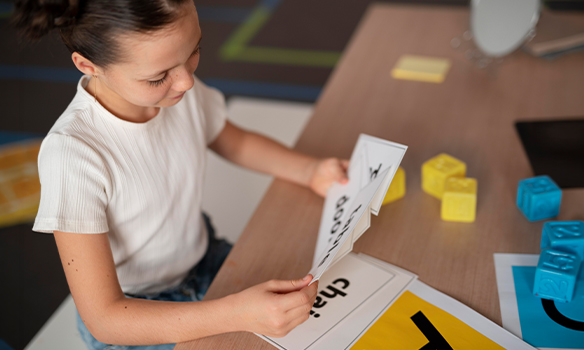
Why Does My Child Mix Up Is/Are/Was/Were?
Read More
Master Thinking and Speaking in English
Read More
Phonic Sounds: What They Are and How to Teach Them at Home
Read More